
CIVIL RIGHTS • ATTORNEYS • KARATE ATTORNEY
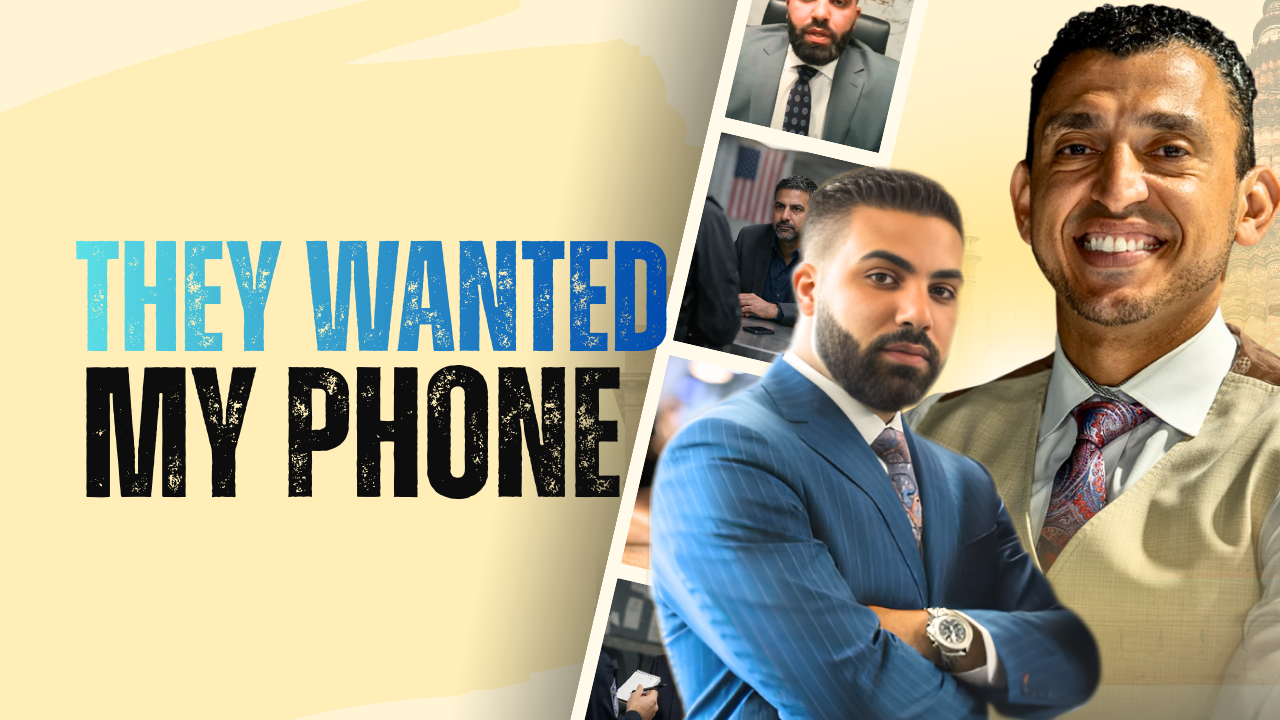
"They Wanted My Phone": Attorney Amir Makled on Civil Rights, Border Profiling, and the Fight for Free Speech
What happens when your identity and your work become inseparable: when your name, your purpose, and your fight are all bound up in one word: justice?
That's the story of my friend and colleague, Amir Makled: a civil rights and personal injury attorney in Dearborn, Michigan. Amir isn't just practicing law. He's living his values, protecting his community, and refusing to be silenced. And recently, that commitment was tested in a way that no American: no attorney: should ever experience.
"I'm a Father First"
When I asked Amir how he defines himself, his answer stopped me.
"I'm a father first. A husband, an attorney, and a Muslim. In that order."
Let that sink in. This is a man whose professional reputation spans over a decade: someone who's argued civil rights cases and helped build bridges across legal, racial, and religious divides: but he centers family first. And it's reflected in how he shows up for his clients, especially in a city like Dearborn, where over 70% of the population is Arab or Muslim.
"My clientele base is Arab, Muslim, or from a marginalized population. I have the honor of serving them, and I love it."
This isn't just representation. It's responsibility.
Shaped by Cyril Hall
Amir's legal foundation was shaped by Cyril Hall, a veteran civil rights attorney in Detroit. Picture this: a Black civil rights lawyer opens a satellite office in Dearborn and brings Amir in early as a partner: not because it was easy, but because of trust and shared values.
"Cyril became more than a mentor. He's a father figure. I'm indebted to him."
That kind of guidance doesn't just shape a career. It sharpens your mission.
Flagged at the Border
Then Amir told me what happened when he returned from a family vacation in the Dominican Republic.
If you've ever been pulled aside by Customs and Border Protection, you know how unsettling it can be. But Amir's story goes far beyond inconvenience.
"They flagged me for additional screening. Then I heard the agent ask: 'Are the TTRT agents available?'"
TTRT: the Tactical Terrorism Response Team. A term Amir had to Google on the spot.
Imagine that. A well-reputed practicing attorney, born and raised in this country, returning from a family trip: suddenly under suspicion. And it didn't end there.
"We Want Your Phone"
They took Amir into a separate interview room. No wife. No kids. Just him and a federal agent.
"We know you're an attorney," they said. "And we know you're handling some high-profile cases."
Why lead with that? Why bring up his cases? Because this was about something bigger.
One of Amir's clients: a University of Michigan protester named Samantha Lewis: is facing felony charges for peacefully demonstrating against the war in Gaza. Amir had been vocal about the case. So had the media. This was about silencing dissent.
The agent slid a pamphlet across the table outlining a federal statute: CBP can seize electronic devices at the border with no warrant, no probable cause, no suspicion required.
Then came the words: "We want your phone."
What Do You Do When You're Targeted?
Amir responded exactly how we're trained to respond.
"I said no. I told them my phone contains over ten years of privileged attorney-client communication. Emails. Notes. Files. All protected."
They pushed back. "Photos aren't privileged."
He stood firm. "It's all privileged as far as I'm concerned."
The agent left to get a supervisor: which is actually required by CBP policy when someone asserts attorney-client privilege. Amir knew that. Good.
Then they came back with a notepad: "Just write down which parts are privileged."
How do you write down ten years of privileged data? You don't. And Amir didn't.
"I told them no. That's not reasonable. That's not legal. I'm not going to help you violate my clients' rights."
Then came a different tactic: "Just show us your contact list."
This is where the decision got tough. Amir knew they had the power to seize his phone. He couldn't afford that. None of us could. So he gave limited written consent:
"You may view my contact list. Nothing else."
He signed it. They took the phone out of view. Minutes later they returned with names: five or six people.
"They didn't dump the phone. They were looking for specific individuals. They knew who they were after."
Amir's response? "Everyone in that phone is either a client, a friend, or family. That's all you're getting."
Two hours had passed. His family was already home. The airport was empty. Customs had to raise the gate just to let him out.
"This wasn't about national security. This was about intimidation. It was a message: 'We see you. We know what you're doing. Be careful.'"
You Can't Silence the Truth
Amir's story isn't just about one attorney. It's about what's happening to lawyers, students, and activists across the country: especially those who speak out. People are being flagged, detained, even deported: not for crimes, but for opinions. Political speech. Protected speech.
I asked Amir what advice he'd give to other attorneys:
"Use a different phone when you travel. Don't store sensitive data. Know your rights: and be ready to assert them. Calmly. Clearly. Legally."
Because that's what he did. And that's what we all need to be prepared to do.
Final Thoughts
If you've ever felt powerless in the face of authority, remember something Amir said to me:
"Most people don't control the pace or the tone when law enforcement steps in. But you should. It shifts everything."
You have rights. You have power. And when you stand in that: even in the most intimidating situations: you protect more than yourself. You protect all of us.
Stay grounded. Stay informed. Stay unshaken.
Back to Community